
How it works
From “who’s coming” to the last stop.
Five steps, shown with real screens from the app in development and a sample family.
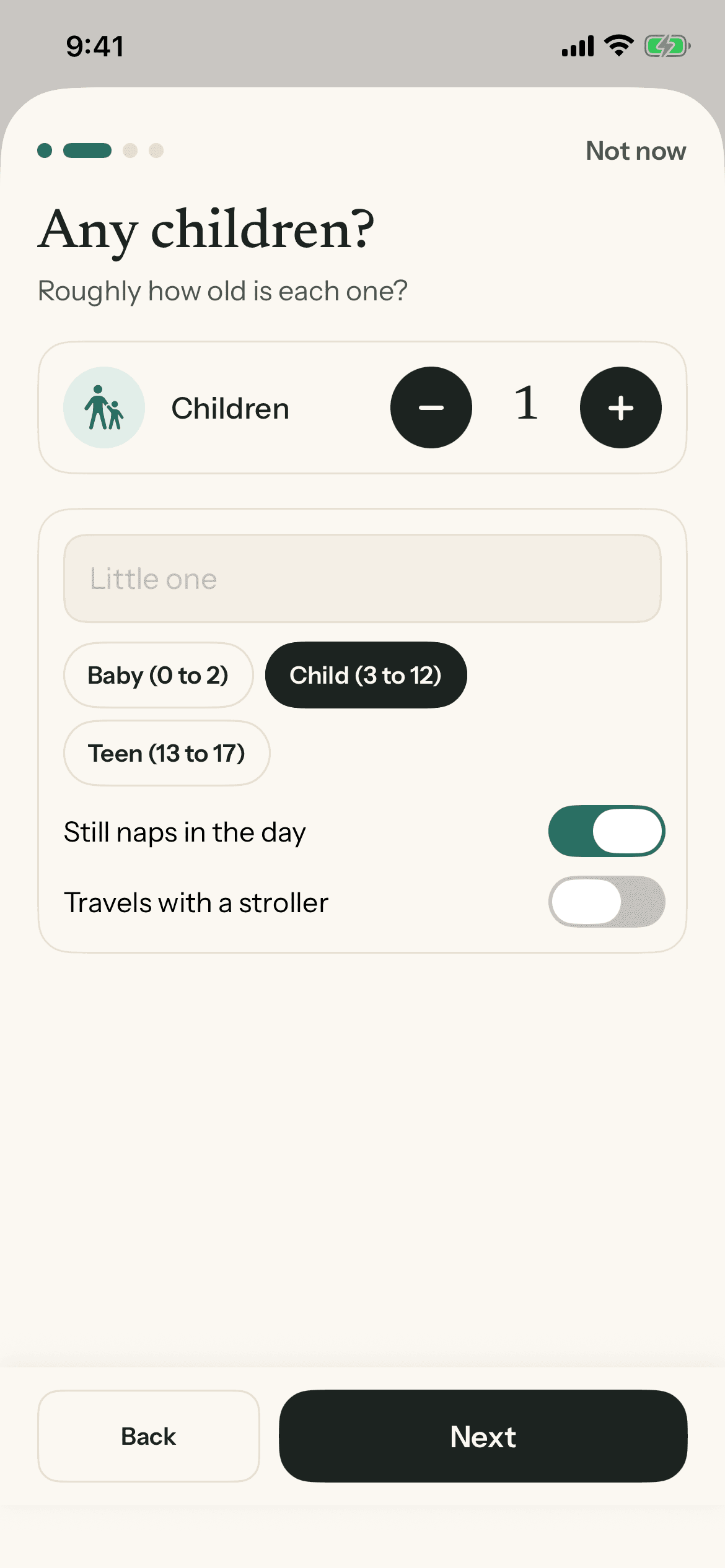
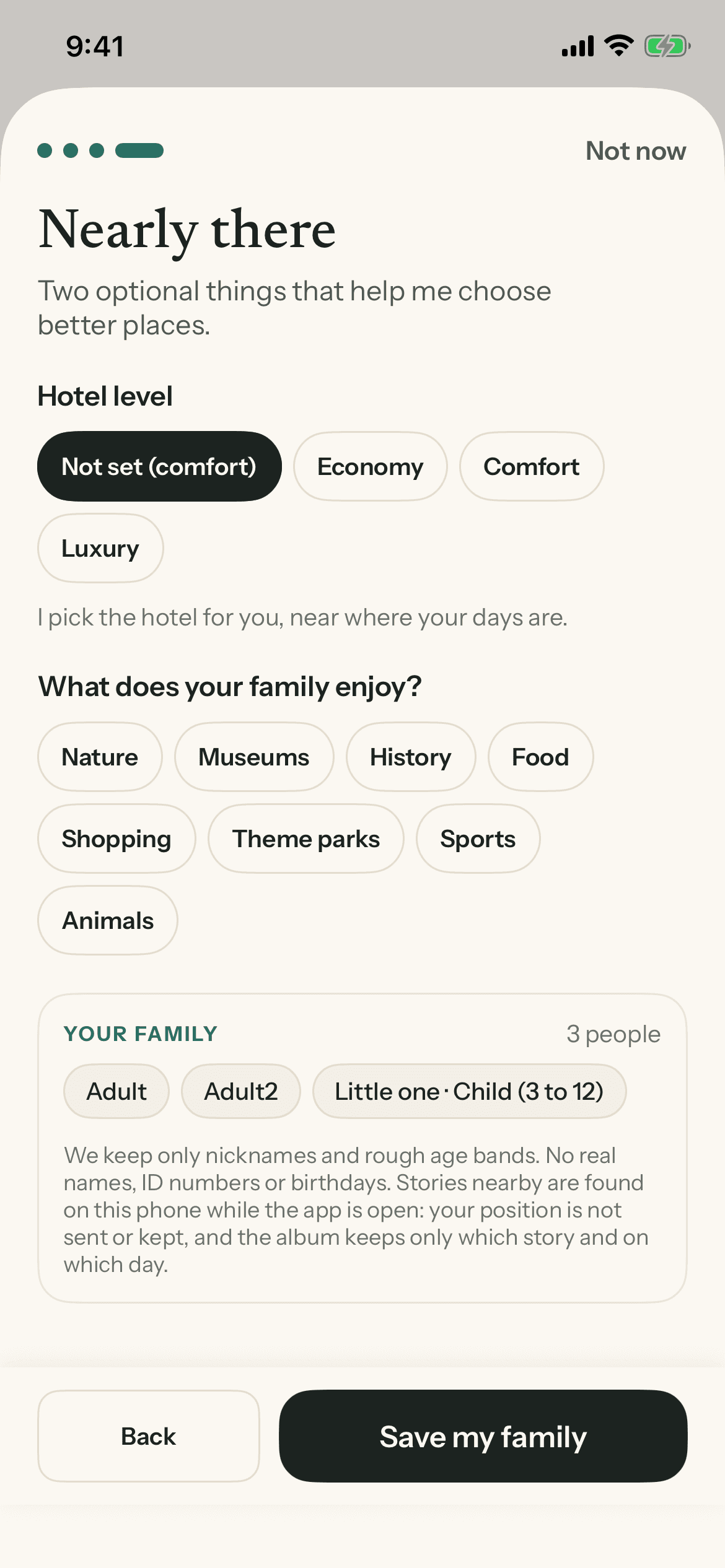
Tell it who’s coming
A nickname for each person if you like — real names aren’t needed. An age band for each child (baby 0–2, child 3–12, teen 13–17), whether they still nap or ride in a stroller, any older travellers, and what your family enjoys. It takes about half a minute, and you can skip it.
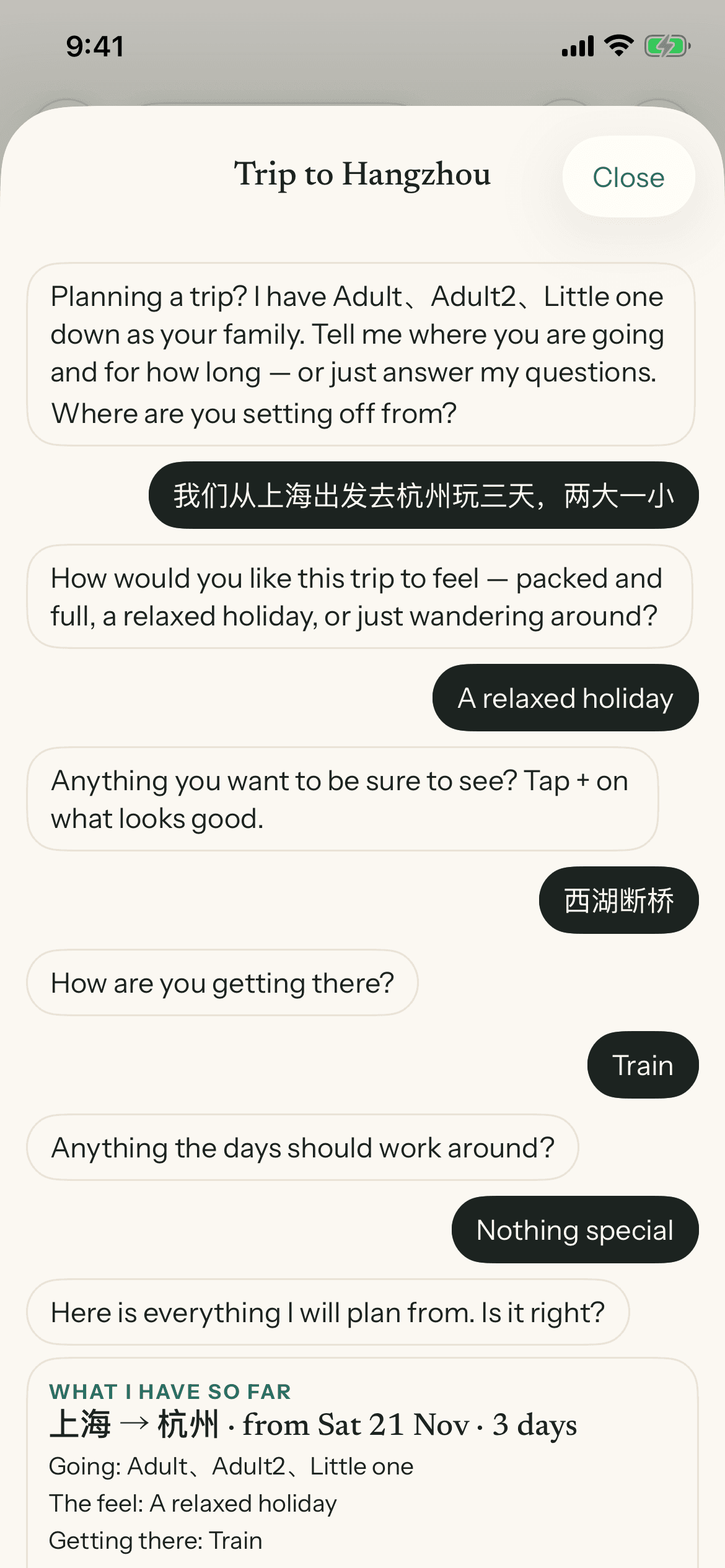
Talk the trip through
Say where you’re going, for how long, and how you’d like it to feel — packed, relaxed or wandering. Type or speak, in English or Chinese. The assistant asks only what it still needs.
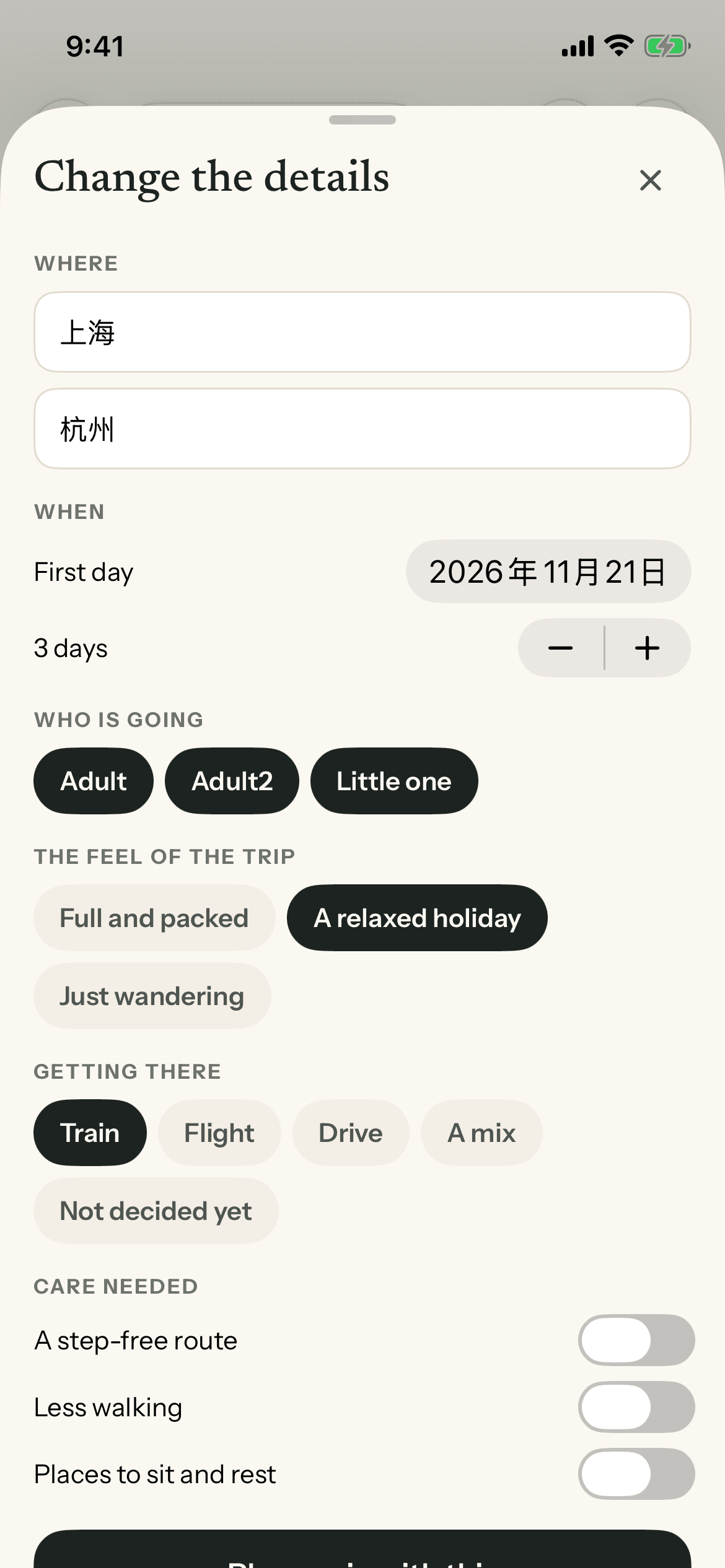
Check what it heard
Before it builds anything, Kinwego reads back what it will plan from: where, when, who, the feel of the trip and how you’re getting there. Change any of it, including care needs — a step-free route, less walking, places to sit and rest.
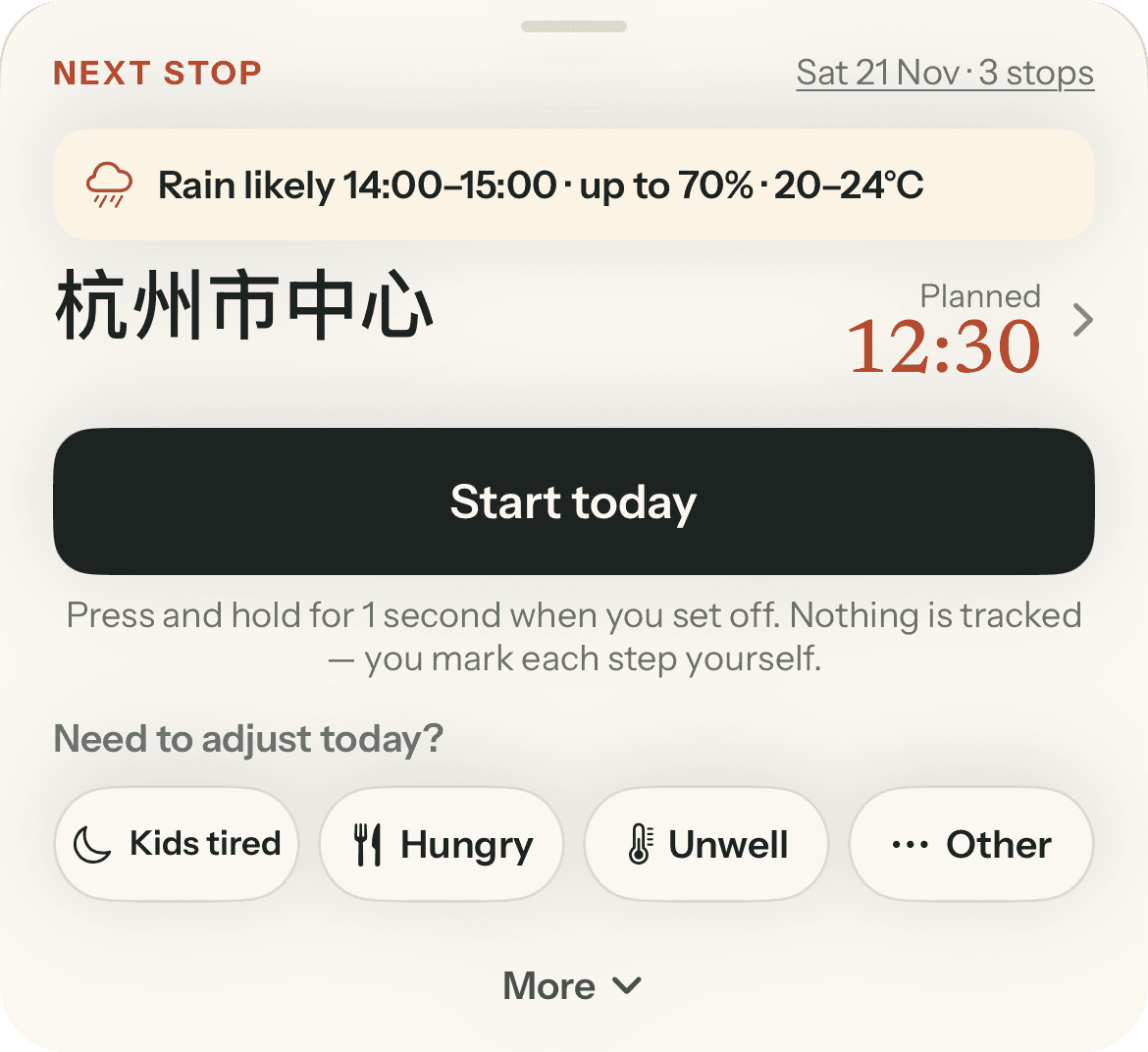
Go, one stop at a time
On the day you see the next stop, when you planned to be there, and the weather. Kids tired, hungry or unwell? Tell it in one tap. Nothing is tracked: you mark each step yourself.
Hear the place
At each stop, a short story told for an adult or for a child, in English or Chinese — history, legend, or a little game of pretend — and read aloud if you like.
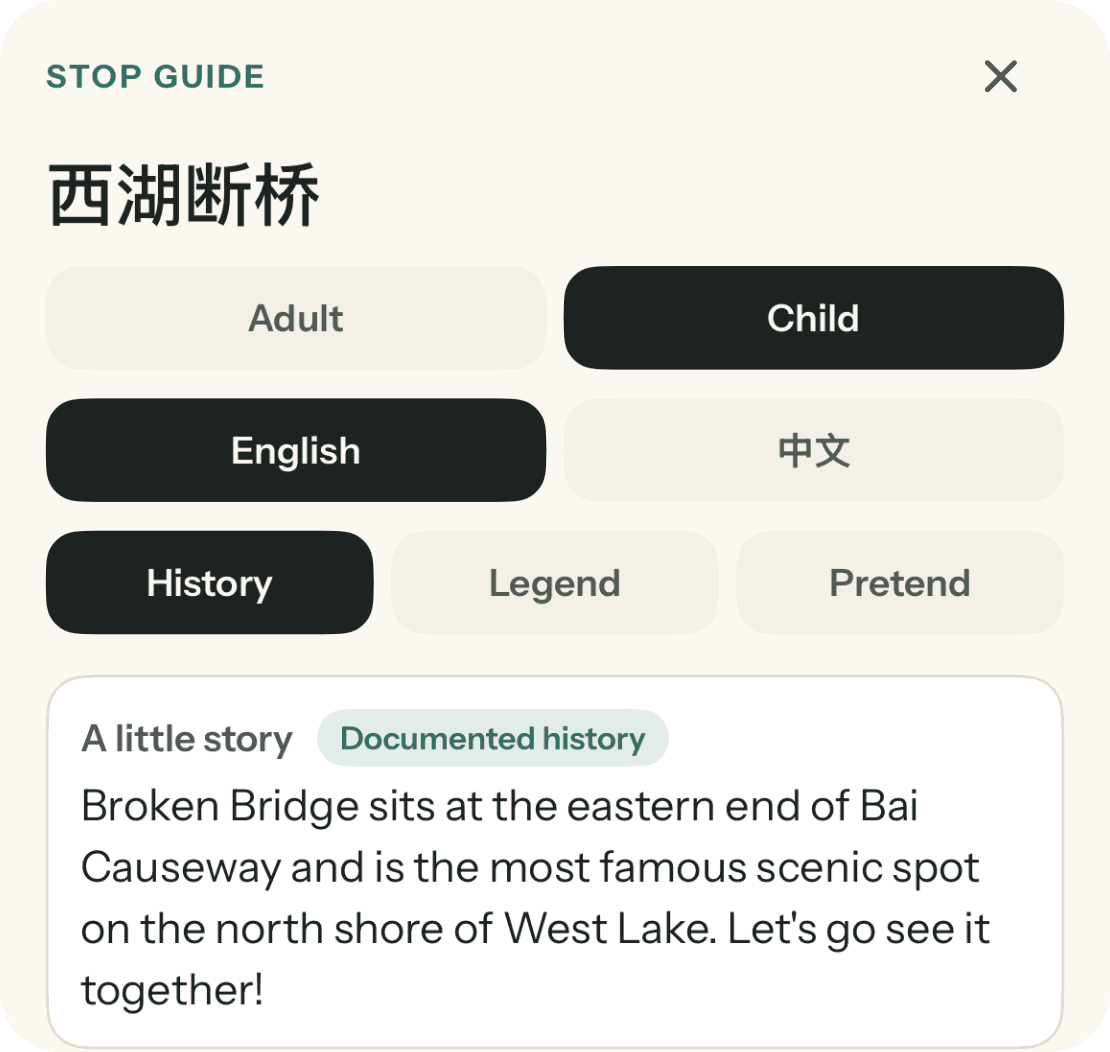
Real screens from the app in development, with a sample family (“Adult”, “Adult2” and “Little one”). Details may change.
Good to know
What to expect while it’s in development.
- Mainland China
- Kinwego plans trips in mainland China. The examples on this site are from Hangzhou.
- iPhone, by invitation
- It’s an iPhone app in development, used with an invitation code. It isn’t on the App Store yet.
- English and Chinese
- The app and its stories are in English and Chinese.
- Check before you go
- Opening hours, routes and weather come from map and weather services and are for reference. The assistant is an AI and can get things wrong.
- Maps, if you agree
- In China the app can show Amap street maps once you agree; otherwise it draws a simple plan of the stops.
- Your agreement first
- Because planning happens by talking with an AI, the app asks you to read and agree to a short privacy notice before you start.